

The Global World Order By Peter Matthies
10 things you must know—and how to navigate the change ahead
 This summer I stepped off the carousel to research the forces shaping our future and how to prepare for the disruptions ahead. I believe this is one of the most critical topics to understand if we want to thrive—as individuals and as businesses—over the coming years.
What follows is a practical summary of my research across economists, hedge fund managers, climate experts, business leaders, and historians—plus a few tools for staying steady in white-water times. Things are moving fast, so we’ll go deeper throughout the year. Also, if you want more, reach out.
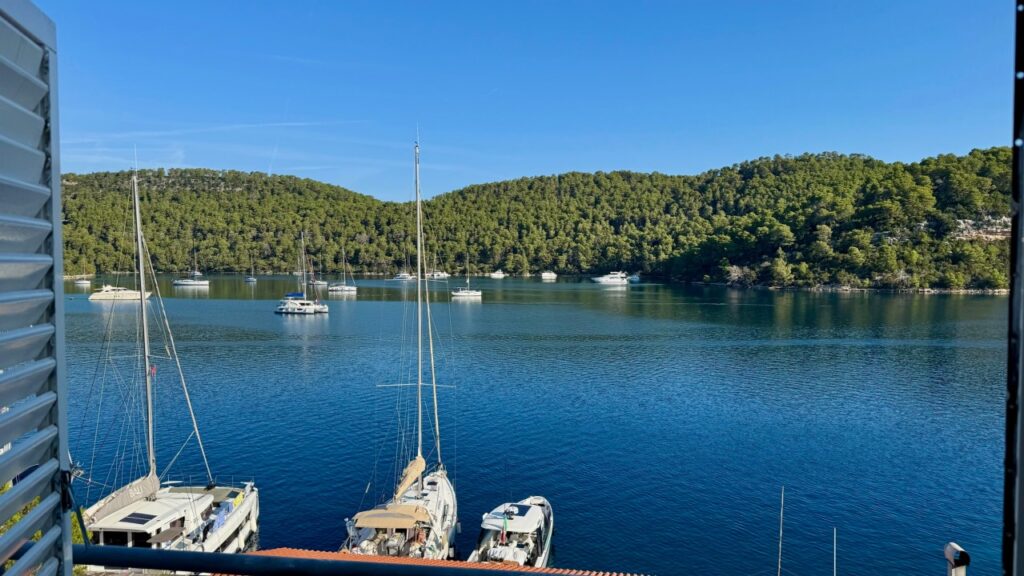
I like to sail, and after some time in Croatia this year, I’m approaching this like a skipper watching the weather:
I’m not here to spread fear—just to prepare for the weather that’s coming.
I want to know when it’s hitting and what to expect.
I want to know when to stay put, when to move, what to do, and where to shelter.
Below are 10 things—the first five are signals to watch; the second five are moves you can make.
Five signals to watch
1) Empires follow a life cycle—and we’re late in one
Every empire—Spanish, Dutch, British, Chinese, and now the U.S.—passes through recognizable stages. The rise of an empire usually starts with a conflict or war, in which the future empire emerges as the winner (the US in case of World War II). The new winner establishes themselves as the new power with a strong (reserve) currency. The downfall is equally marked by specific events: excess debt, domestic disorder, and rising international conflict. We’re seeing all three.
2) The cycle is longer than a lifetime
Most of us don’t live through an entire cycle, so it’s hard to recognize the pattern while we’re in it. If you ask your money manager, they will probably tell you that stocks always outperform the market over time. That’s true within the regular economic cycle, but not during the downfall of an empire (see the Great Depression).
3) The health chain of a nation
In a healthy nation, education drives innovation → productivity → competitiveness → trade → wealth & power → military and financial strength. Break the chain at the start, and the outcomes down the line suffer.
4) The five big forces shaping today’s order
Economic cycles & debt. U.S. debt is at historic highs, amounting to $37 trillion. The US generates $7 trillion and spends about $9 trillion per year, pushing towards a “natural breakdown”, which historically has “erased the mess” and allowed a new world order to emerge.
Domestic fragmentation. Political and social polarization, widening inequality, and vote-winning promises invite overreach and autocracy.
Geopolitical reshuffling. Conflicts increase and global cooperation between nations weakens as powers reposition.
These three influencers are recurring phenomena in the life-cycle of an empire. The remaining two influencers are specifically powerful in our times.
Climate change. Climate can trigger more upheaval than wars. One million refugees is putting European politics to a test; imagine the impact of a thousandfold more climate-driven migration to our social and political systems.
Technology & AI. Massive opportunity—and a threat to humanity. Without AI security in place, nations race towards creating superintelligence. As humans, we would have the intelligence of a hamster compared to a Ph.D. level person. Your hamster might know that you leave the house in the morning, but he has no clue what you’ll do, and what’s in store for him when you get back. Similarly, we’d be in the dark about the choices a superintelligence would make.
5) Knowing where we are changes how we act
At 60, you plan differently than at 20. You allocate more to health and make different bets. Likewise, as we approach the late stage of a large cycle, our choices must adapt—in finance, business, and personal preparation.
So what? Now what? Five practical moves
Above, I mentioned that I’m not writing this to create panic but simply to inform and share. The complexity of the global system and above influencers doesn’t make it possible to offer a one-stop-solution. Nevertheless, here are a few thoughts on what you can do – as an individual, for your family, and as a business leader.
- Stay awake. Track the signals above to gauge where we are in the cycle. Awareness is critical.
- Create a Plan B. Decide where you’d go if things get turbulent. Diversify across asset classes, currencies, and geographies.
- Strengthen sovereignty. Build outer and inner independence. While the outside world churns, cultivate an inner “eye of the storm” through real personal development.
- Double down on Purpose. Lead boldly with a meaningful purpose—to attract talent, guide products and services, and align people beyond political divides.
- Build community. Don’t sail the storm alone. Invest in trusted networks and create business cultures that amplify human potential.
Please take these reflections as guideposts, not predictions. In an unpredictable world, test what resonates for you—and leave the rest.
We drew on a range of voices: tech/AI (Roman Yampolskiy, Geoffrey Hinton, Peter Diamandis), economics and finance (Ray Dalio, Rinaldo Brutoco), climate leaders (Al Gore), plus intuitives and consciousness experts to bring a Conscious Business lens.
If you’d like more detail—or to explore how to apply this in your life or organization—contact us at info@consciousbusinessinstitute.com.
Reprinted from LinkedIn
Responses